#include <UsageEnvironment.hh>#include <stdio.h>Include dependency graph for OutputFile.hh:
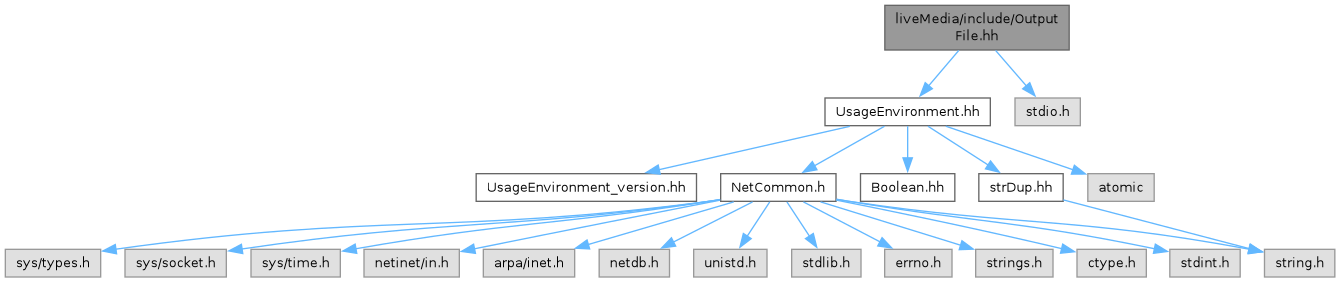
This graph shows which files directly or indirectly include this file:

Go to the source code of this file.
Functions | |
| FILE * | OpenOutputFile (UsageEnvironment &env, char const *fileName) |
| void | CloseOutputFile (FILE *fid) |
| void CloseOutputFile | ( | FILE * | fid | ) |
Definition at line 57 of file OutputFile.cpp.
References NULL.
Referenced by AVIFileSink::~AVIFileSink(), and QuickTimeFileSink::~QuickTimeFileSink().
00057 { 00058 // Don't close 'stdout' or 'stderr', in case we want to use it again later. 00059 if (fid != NULL && fid != stdout && fid != stderr) fclose(fid); 00060 }
| FILE* OpenOutputFile | ( | UsageEnvironment & | env, | |
| char const * | fileName | |||
| ) |
Definition at line 32 of file OutputFile.cpp.
References env, NULL, and UsageEnvironment::setResultMsg().
Referenced by FileSink::addData(), AVIFileSink::AVIFileSink(), H264VideoFileSink::createNew(), FileSink::createNew(), AMRAudioFileSink::createNew(), and QuickTimeFileSink::QuickTimeFileSink().
00032 { 00033 FILE* fid; 00034 00035 // Check for special case 'file names': "stdout" and "stderr" 00036 if (strcmp(fileName, "stdout") == 0) { 00037 fid = stdout; 00038 #if defined(__WIN32__) || defined(_WIN32) 00039 _setmode(_fileno(stdout), _O_BINARY); // convert to binary mode 00040 #endif 00041 } else if (strcmp(fileName, "stderr") == 0) { 00042 fid = stderr; 00043 #if defined(__WIN32__) || defined(_WIN32) 00044 _setmode(_fileno(stderr), _O_BINARY); // convert to binary mode 00045 #endif 00046 } else { 00047 fid = fopen(fileName, "wb"); 00048 } 00049 00050 if (fid == NULL) { 00051 env.setResultMsg("unable to open file \"", fileName, "\""); 00052 } 00053 00054 return fid; 00055 }
1.5.2