#include <RTSPClient.hh>
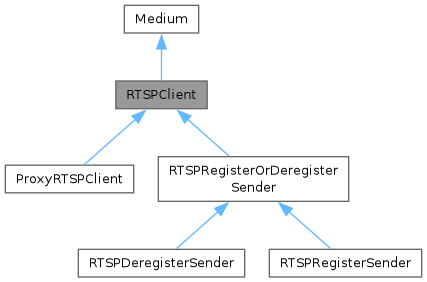
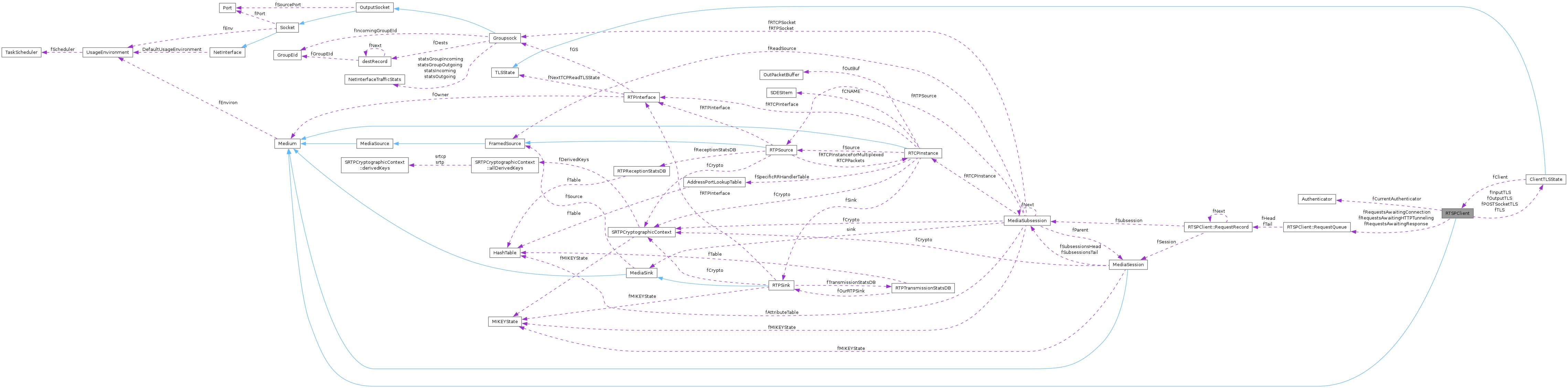
Data Structures | |
| class | RequestRecord |
| class | RequestQueue |
Public Types | |
| typedef void | responseHandler(RTSPClient *rtspClient, int resultCode, char *resultString) |
Public Member Functions | |
| unsigned | sendDescribeCommand (responseHandler *responseHandler, Authenticator *authenticator=NULL) |
| unsigned | sendOptionsCommand (responseHandler *responseHandler, Authenticator *authenticator=NULL) |
| unsigned | sendAnnounceCommand (char const *sdpDescription, responseHandler *responseHandler, Authenticator *authenticator=NULL) |
| unsigned | sendSetupCommand (MediaSubsession &subsession, responseHandler *responseHandler, Boolean streamOutgoing=False, Boolean streamUsingTCP=False, Boolean forceMulticastOnUnspecified=False, Authenticator *authenticator=NULL) |
| unsigned | sendPlayCommand (MediaSession &session, responseHandler *responseHandler, double start=0.0f, double end=-1.0f, float scale=1.0f, Authenticator *authenticator=NULL) |
| unsigned | sendPlayCommand (MediaSubsession &subsession, responseHandler *responseHandler, double start=0.0f, double end=-1.0f, float scale=1.0f, Authenticator *authenticator=NULL) |
| unsigned | sendPlayCommand (MediaSession &session, responseHandler *responseHandler, char const *absStartTime, char const *absEndTime=NULL, float scale=1.0f, Authenticator *authenticator=NULL) |
| unsigned | sendPlayCommand (MediaSubsession &subsession, responseHandler *responseHandler, char const *absStartTime, char const *absEndTime=NULL, float scale=1.0f, Authenticator *authenticator=NULL) |
| unsigned | sendPauseCommand (MediaSession &session, responseHandler *responseHandler, Authenticator *authenticator=NULL) |
| unsigned | sendPauseCommand (MediaSubsession &subsession, responseHandler *responseHandler, Authenticator *authenticator=NULL) |
| unsigned | sendRecordCommand (MediaSession &session, responseHandler *responseHandler, Authenticator *authenticator=NULL) |
| unsigned | sendRecordCommand (MediaSubsession &subsession, responseHandler *responseHandler, Authenticator *authenticator=NULL) |
| unsigned | sendTeardownCommand (MediaSession &session, responseHandler *responseHandler, Authenticator *authenticator=NULL) |
| unsigned | sendTeardownCommand (MediaSubsession &subsession, responseHandler *responseHandler, Authenticator *authenticator=NULL) |
| unsigned | sendSetParameterCommand (MediaSession &session, responseHandler *responseHandler, char const *parameterName, char const *parameterValue, Authenticator *authenticator=NULL) |
| unsigned | sendGetParameterCommand (MediaSession &session, responseHandler *responseHandler, char const *parameterName, Authenticator *authenticator=NULL) |
| void | setRequireValue (char const *requireValue=NULL) |
| void | sendDummyUDPPackets (MediaSession &session, unsigned numDummyPackets=2) |
| void | sendDummyUDPPackets (MediaSubsession &subsession, unsigned numDummyPackets=2) |
| void | setSpeed (MediaSession &session, float speed=1.0f) |
| Boolean | changeResponseHandler (unsigned cseq, responseHandler *newResponseHandler) |
| int | socketNum () const |
| Boolean | parseRTSPURL (char const *url, char *&username, char *&password, NetAddress &address, portNumBits &portNum, char const **urlSuffix=NULL) |
| void | setUserAgentString (char const *userAgentName) |
| void | disallowBasicAuthentication () |
| unsigned | sessionTimeoutParameter () const |
| char const * | url () const |
| UsageEnvironment & | envir () const |
| char const * | name () const |
| virtual Boolean | isSource () const |
| virtual Boolean | isSink () const |
| virtual Boolean | isRTCPInstance () const |
| virtual Boolean | isRTSPServer () const |
| virtual Boolean | isMediaSession () const |
| virtual Boolean | isServerMediaSession () const |
Static Public Member Functions | |
| static RTSPClient * | createNew (UsageEnvironment &env, char const *rtspURL, int verbosityLevel=0, char const *applicationName=NULL, portNumBits tunnelOverHTTPPortNum=0, int socketNumToServer=-1) |
| static Boolean | lookupByName (UsageEnvironment &env, char const *sourceName, RTSPClient *&resultClient) |
| static Boolean | lookupByName (UsageEnvironment &env, char const *mediumName, Medium *&resultMedium) |
| static void | close (UsageEnvironment &env, char const *mediumName) |
| static void | close (Medium *medium) |
Data Fields | |
| u_int16_t | desiredMaxIncomingPacketSize |
Static Public Attributes | |
| static unsigned | responseBufferSize |
Protected Member Functions | |
| RTSPClient (UsageEnvironment &env, char const *rtspURL, int verbosityLevel, char const *applicationName, portNumBits tunnelOverHTTPPortNum, int socketNumToServer) | |
| virtual | ~RTSPClient () |
| void | reset () |
| void | setBaseURL (char const *url) |
| int | grabSocket () |
| virtual unsigned | sendRequest (RequestRecord *request) |
| virtual Boolean | setRequestFields (RequestRecord *request, char *&cmdURL, Boolean &cmdURLWasAllocated, char const *&protocolStr, char *&extraHeaders, Boolean &extraHeadersWereAllocated) |
| virtual int | connectToServer (int socketNum, portNumBits remotePortNum) |
| TaskToken & | nextTask () |
Protected Attributes | |
| int | fVerbosityLevel |
| unsigned | fCSeq |
| Authenticator | fCurrentAuthenticator |
| Boolean | fAllowBasicAuthentication |
| struct sockaddr_storage | fServerAddress |
Private Member Functions | |
| virtual Boolean | isRTSPClient () const |
| void | resetTCPSockets () |
| void | resetResponseBuffer () |
| int | openConnection () |
| char * | createAuthenticatorString (char const *cmd, char const *url) |
| char * | createBlocksizeString (Boolean streamUsingTCP) |
| char * | createKeyMgmtString (char const *url, MediaSubsession const &subsession) |
| void | handleRequestError (RequestRecord *request) |
| Boolean | parseResponseCode (char const *line, unsigned &responseCode, char const *&responseString) |
| void | handleIncomingRequest () |
| Boolean | parseTransportParams (char const *paramsStr, char *&serverAddressStr, portNumBits &serverPortNum, unsigned char &rtpChannelId, unsigned char &rtcpChannelId) |
| Boolean | parseScaleParam (char const *paramStr, float &scale) |
| Boolean | parseSpeedParam (char const *paramStr, float &speed) |
| Boolean | parseRTPInfoParams (char const *¶mStr, u_int16_t &seqNum, u_int32_t ×tamp) |
| Boolean | handleSETUPResponse (MediaSubsession &subsession, char const *sessionParamsStr, char const *transportParamsStr, Boolean streamUsingTCP) |
| Boolean | handlePLAYResponse (MediaSession *session, MediaSubsession *subsession, char const *scaleParamsStr, const char *speedParamsStr, char const *rangeParamsStr, char const *rtpInfoParamsStr) |
| Boolean | handleTEARDOWNResponse () |
| Boolean | handleGET_PARAMETERResponse (char const *parameterName, char *&resultValueString, char *resultValueStringEnd) |
| Boolean | handleAuthenticationFailure (char const *wwwAuthenticateParamsStr) |
| Boolean | resendCommand (RequestRecord *request) |
| char const * | sessionURL (MediaSession const &session) const |
| void | handleAlternativeRequestByte1 (u_int8_t requestByte) |
| void | constructSubsessionURL (MediaSubsession const &subsession, char const *&prefix, char const *&separator, char const *&suffix) |
| Boolean | setupHTTPTunneling1 () |
| void | responseHandlerForHTTP_GET1 (int responseCode, char *responseString) |
| Boolean | setupHTTPTunneling2 () |
| void | connectionHandler1 () |
| void | incomingDataHandler1 () |
| void | handleResponseBytes (int newBytesRead) |
| int | write (const char *data, unsigned count) |
| int | read (u_int8_t *buffer, unsigned bufferSize) |
Static Private Member Functions | |
| static Boolean | checkForHeader (char const *line, char const *headerName, unsigned headerNameLength, char const *&headerParams) |
| static void | handleAlternativeRequestByte (void *, u_int8_t requestByte) |
| static void | responseHandlerForHTTP_GET (RTSPClient *rtspClient, int responseCode, char *responseString) |
| static void | connectionHandler (void *, int) |
| static void | incomingDataHandler (void *, int) |
Private Attributes | |
| portNumBits | fTunnelOverHTTPPortNum |
| char * | fUserAgentHeaderStr |
| unsigned | fUserAgentHeaderStrLen |
| int | fInputSocketNum |
| int | fOutputSocketNum |
| char * | fBaseURL |
| unsigned char | fTCPStreamIdCount |
| char * | fLastSessionId |
| unsigned | fSessionTimeoutParameter |
| char * | fResponseBuffer |
| unsigned | fResponseBytesAlreadySeen |
| unsigned | fResponseBufferBytesLeft |
| RequestQueue | fRequestsAwaitingConnection |
| RequestQueue | fRequestsAwaitingHTTPTunneling |
| RequestQueue | fRequestsAwaitingResponse |
| char * | fRequireStr |
| char | fSessionCookie [33] |
| unsigned | fSessionCookieCounter |
| Boolean | fHTTPTunnelingConnectionIsPending |
| ClientTLSState | fTLS |
| ClientTLSState | fPOSTSocketTLS |
| ClientTLSState * | fInputTLS |
| ClientTLSState * | fOutputTLS |
| UsageEnvironment & | fEnviron |
| char | fMediumName [mediumNameMaxLen] |
| TaskToken | fNextTask |
Friends | |
| class | ClientTLSState |
Detailed Description
Definition at line 42 of file RTSPClient.hh.
Member Typedef Documentation
◆ responseHandler
| typedef void RTSPClient::responseHandler(RTSPClient *rtspClient, int resultCode, char *resultString) |
Definition at line 55 of file RTSPClient.hh.
Constructor & Destructor Documentation
◆ RTSPClient()
|
protected |
Referenced by createNew(), lookupByName(), and responseHandlerForHTTP_GET().
◆ ~RTSPClient()
|
protectedvirtual |
Member Function Documentation
◆ changeResponseHandler()
| Boolean RTSPClient::changeResponseHandler | ( | unsigned | cseq, |
| responseHandler * | newResponseHandler ) |
◆ checkForHeader()
|
staticprivate |
◆ close() [1/2]
◆ close() [2/2]
|
staticinherited |
◆ connectionHandler()
|
staticprivate |
◆ connectionHandler1()
|
private |
◆ connectToServer()
|
protectedvirtual |
Reimplemented in ProxyRTSPClient.
References socketNum().
◆ constructSubsessionURL()
|
private |
◆ createAuthenticatorString()
|
private |
References url().
◆ createBlocksizeString()
|
private |
◆ createKeyMgmtString()
|
private |
References url().
◆ createNew()
|
static |
References NULL, and RTSPClient().
◆ disallowBasicAuthentication()
|
inline |
◆ envir()
|
inlineinherited |
Definition at line 59 of file Media.hh.
References fEnviron.
Referenced by MediaSubsession::env(), GenericMediaServer::ClientConnection::envir(), GenericMediaServer::ClientSession::envir(), and RTPInterface::envir().
◆ grabSocket()
|
protected |
◆ handleAlternativeRequestByte()
|
staticprivate |
◆ handleAlternativeRequestByte1()
|
private |
◆ handleAuthenticationFailure()
|
private |
◆ handleGET_PARAMETERResponse()
|
private |
◆ handleIncomingRequest()
|
private |
◆ handlePLAYResponse()
|
private |
◆ handleRequestError()
|
private |
◆ handleResponseBytes()
|
private |
◆ handleSETUPResponse()
|
private |
◆ handleTEARDOWNResponse()
|
private |
◆ incomingDataHandler()
|
staticprivate |
◆ incomingDataHandler1()
|
private |
◆ isMediaSession()
|
virtualinherited |
Reimplemented in MediaSession.
◆ isRTCPInstance()
|
virtualinherited |
Reimplemented in RTCPInstance.
◆ isRTSPClient()
◆ isRTSPServer()
|
virtualinherited |
Reimplemented in RTSPServer.
◆ isServerMediaSession()
|
virtualinherited |
Reimplemented in ServerMediaSession.
◆ isSink()
◆ isSource()
|
virtualinherited |
Reimplemented in MediaSource.
◆ lookupByName() [1/2]
|
staticinherited |
References Medium().
◆ lookupByName() [2/2]
|
static |
References RTSPClient().
◆ name()
|
inlineinherited |
Definition at line 61 of file Media.hh.
References fMediumName.
Referenced by QuickTimeFileSink::_atom(), RTSPServer::lookupByName(), RTCPInstance::sendAppPacket(), and OnDemandServerMediaSubsession::sendRTCPAppPacket().
◆ nextTask()
|
inlineprotectedinherited |
◆ openConnection()
|
private |
◆ parseResponseCode()
|
private |
◆ parseRTPInfoParams()
|
private |
◆ parseRTSPURL()
| Boolean RTSPClient::parseRTSPURL | ( | char const * | url, |
| char *& | username, | ||
| char *& | password, | ||
| NetAddress & | address, | ||
| portNumBits & | portNum, | ||
| char const ** | urlSuffix = NULL ) |
◆ parseScaleParam()
|
private |
◆ parseSpeedParam()
|
private |
◆ parseTransportParams()
|
private |
◆ read()
|
private |
◆ resendCommand()
|
private |
◆ reset()
|
protected |
◆ resetResponseBuffer()
|
private |
◆ resetTCPSockets()
|
private |
◆ responseHandlerForHTTP_GET()
|
staticprivate |
References RTSPClient().
◆ responseHandlerForHTTP_GET1()
|
private |
◆ sendAnnounceCommand()
| unsigned RTSPClient::sendAnnounceCommand | ( | char const * | sdpDescription, |
| responseHandler * | responseHandler, | ||
| Authenticator * | authenticator = NULL ) |
References NULL.
◆ sendDescribeCommand()
| unsigned RTSPClient::sendDescribeCommand | ( | responseHandler * | responseHandler, |
| Authenticator * | authenticator = NULL ) |
References NULL.
◆ sendDummyUDPPackets() [1/2]
| void RTSPClient::sendDummyUDPPackets | ( | MediaSession & | session, |
| unsigned | numDummyPackets = 2 ) |
◆ sendDummyUDPPackets() [2/2]
| void RTSPClient::sendDummyUDPPackets | ( | MediaSubsession & | subsession, |
| unsigned | numDummyPackets = 2 ) |
◆ sendGetParameterCommand()
| unsigned RTSPClient::sendGetParameterCommand | ( | MediaSession & | session, |
| responseHandler * | responseHandler, | ||
| char const * | parameterName, | ||
| Authenticator * | authenticator = NULL ) |
References NULL.
◆ sendOptionsCommand()
| unsigned RTSPClient::sendOptionsCommand | ( | responseHandler * | responseHandler, |
| Authenticator * | authenticator = NULL ) |
References NULL.
◆ sendPauseCommand() [1/2]
| unsigned RTSPClient::sendPauseCommand | ( | MediaSession & | session, |
| responseHandler * | responseHandler, | ||
| Authenticator * | authenticator = NULL ) |
References NULL.
◆ sendPauseCommand() [2/2]
| unsigned RTSPClient::sendPauseCommand | ( | MediaSubsession & | subsession, |
| responseHandler * | responseHandler, | ||
| Authenticator * | authenticator = NULL ) |
References NULL.
◆ sendPlayCommand() [1/4]
| unsigned RTSPClient::sendPlayCommand | ( | MediaSession & | session, |
| responseHandler * | responseHandler, | ||
| char const * | absStartTime, | ||
| char const * | absEndTime = NULL, | ||
| float | scale = 1.0f, | ||
| Authenticator * | authenticator = NULL ) |
References NULL.
◆ sendPlayCommand() [2/4]
| unsigned RTSPClient::sendPlayCommand | ( | MediaSession & | session, |
| responseHandler * | responseHandler, | ||
| double | start = 0.0f, | ||
| double | end = -1.0f, | ||
| float | scale = 1.0f, | ||
| Authenticator * | authenticator = NULL ) |
References NULL.
◆ sendPlayCommand() [3/4]
| unsigned RTSPClient::sendPlayCommand | ( | MediaSubsession & | subsession, |
| responseHandler * | responseHandler, | ||
| char const * | absStartTime, | ||
| char const * | absEndTime = NULL, | ||
| float | scale = 1.0f, | ||
| Authenticator * | authenticator = NULL ) |
References NULL.
◆ sendPlayCommand() [4/4]
| unsigned RTSPClient::sendPlayCommand | ( | MediaSubsession & | subsession, |
| responseHandler * | responseHandler, | ||
| double | start = 0.0f, | ||
| double | end = -1.0f, | ||
| float | scale = 1.0f, | ||
| Authenticator * | authenticator = NULL ) |
References NULL.
◆ sendRecordCommand() [1/2]
| unsigned RTSPClient::sendRecordCommand | ( | MediaSession & | session, |
| responseHandler * | responseHandler, | ||
| Authenticator * | authenticator = NULL ) |
References NULL.
◆ sendRecordCommand() [2/2]
| unsigned RTSPClient::sendRecordCommand | ( | MediaSubsession & | subsession, |
| responseHandler * | responseHandler, | ||
| Authenticator * | authenticator = NULL ) |
References NULL.
◆ sendRequest()
|
protectedvirtual |
◆ sendSetParameterCommand()
| unsigned RTSPClient::sendSetParameterCommand | ( | MediaSession & | session, |
| responseHandler * | responseHandler, | ||
| char const * | parameterName, | ||
| char const * | parameterValue, | ||
| Authenticator * | authenticator = NULL ) |
References NULL.
◆ sendSetupCommand()
| unsigned RTSPClient::sendSetupCommand | ( | MediaSubsession & | subsession, |
| responseHandler * | responseHandler, | ||
| Boolean | streamOutgoing = False, | ||
| Boolean | streamUsingTCP = False, | ||
| Boolean | forceMulticastOnUnspecified = False, | ||
| Authenticator * | authenticator = NULL ) |
◆ sendTeardownCommand() [1/2]
| unsigned RTSPClient::sendTeardownCommand | ( | MediaSession & | session, |
| responseHandler * | responseHandler, | ||
| Authenticator * | authenticator = NULL ) |
References NULL.
◆ sendTeardownCommand() [2/2]
| unsigned RTSPClient::sendTeardownCommand | ( | MediaSubsession & | subsession, |
| responseHandler * | responseHandler, | ||
| Authenticator * | authenticator = NULL ) |
References NULL.
◆ sessionTimeoutParameter()
|
inline |
◆ sessionURL()
|
private |
◆ setBaseURL()
|
protected |
References url().
◆ setRequestFields()
|
protectedvirtual |
Reimplemented in RTSPDeregisterSender, and RTSPRegisterSender.
◆ setRequireValue()
◆ setSpeed()
| void RTSPClient::setSpeed | ( | MediaSession & | session, |
| float | speed = 1.0f ) |
◆ setupHTTPTunneling1()
|
private |
◆ setupHTTPTunneling2()
|
private |
◆ setUserAgentString()
| void RTSPClient::setUserAgentString | ( | char const * | userAgentName | ) |
◆ socketNum()
|
inline |
Definition at line 176 of file RTSPClient.hh.
References fInputSocketNum.
Referenced by ProxyRTSPClient::connectToServer(), and connectToServer().
◆ url()
|
inline |
Definition at line 196 of file RTSPClient.hh.
References fBaseURL.
Referenced by createAuthenticatorString(), createKeyMgmtString(), parseRTSPURL(), and setBaseURL().
◆ write()
|
private |
Friends And Related Symbol Documentation
◆ ClientTLSState
|
friend |
Definition at line 368 of file RTSPClient.hh.
References ClientTLSState.
Referenced by ClientTLSState.
Field Documentation
◆ desiredMaxIncomingPacketSize
| u_int16_t RTSPClient::desiredMaxIncomingPacketSize |
Definition at line 333 of file RTSPClient.hh.
◆ fAllowBasicAuthentication
|
protected |
Definition at line 341 of file RTSPClient.hh.
Referenced by disallowBasicAuthentication().
◆ fBaseURL
|
private |
Definition at line 349 of file RTSPClient.hh.
Referenced by url().
◆ fCSeq
|
protected |
Definition at line 339 of file RTSPClient.hh.
◆ fCurrentAuthenticator
|
protected |
Definition at line 340 of file RTSPClient.hh.
◆ fEnviron
|
privateinherited |
◆ fHTTPTunnelingConnectionIsPending
|
private |
Definition at line 361 of file RTSPClient.hh.
◆ fInputSocketNum
|
private |
Definition at line 348 of file RTSPClient.hh.
Referenced by socketNum().
◆ fInputTLS
|
private |
Definition at line 366 of file RTSPClient.hh.
◆ fLastSessionId
|
private |
Definition at line 351 of file RTSPClient.hh.
◆ fMediumName
|
privateinherited |
◆ fNextTask
|
privateinherited |
Definition at line 84 of file Media.hh.
Referenced by nextTask().
◆ fOutputSocketNum
|
private |
Definition at line 348 of file RTSPClient.hh.
◆ fOutputTLS
|
private |
Definition at line 367 of file RTSPClient.hh.
◆ fPOSTSocketTLS
|
private |
Definition at line 365 of file RTSPClient.hh.
◆ fRequestsAwaitingConnection
|
private |
Definition at line 355 of file RTSPClient.hh.
◆ fRequestsAwaitingHTTPTunneling
|
private |
Definition at line 355 of file RTSPClient.hh.
◆ fRequestsAwaitingResponse
|
private |
Definition at line 355 of file RTSPClient.hh.
◆ fRequireStr
|
private |
Definition at line 356 of file RTSPClient.hh.
◆ fResponseBuffer
|
private |
Definition at line 353 of file RTSPClient.hh.
◆ fResponseBufferBytesLeft
|
private |
Definition at line 354 of file RTSPClient.hh.
◆ fResponseBytesAlreadySeen
|
private |
Definition at line 354 of file RTSPClient.hh.
◆ fServerAddress
|
protected |
Definition at line 342 of file RTSPClient.hh.
◆ fSessionCookie
|
private |
Definition at line 359 of file RTSPClient.hh.
◆ fSessionCookieCounter
|
private |
Definition at line 360 of file RTSPClient.hh.
◆ fSessionTimeoutParameter
|
private |
Definition at line 352 of file RTSPClient.hh.
Referenced by sessionTimeoutParameter().
◆ fTCPStreamIdCount
|
private |
Definition at line 350 of file RTSPClient.hh.
◆ fTLS
|
private |
Definition at line 364 of file RTSPClient.hh.
◆ fTunnelOverHTTPPortNum
|
private |
Definition at line 345 of file RTSPClient.hh.
◆ fUserAgentHeaderStr
|
private |
Definition at line 346 of file RTSPClient.hh.
◆ fUserAgentHeaderStrLen
|
private |
Definition at line 347 of file RTSPClient.hh.
◆ fVerbosityLevel
|
protected |
Definition at line 338 of file RTSPClient.hh.
◆ responseBufferSize
|
static |
Definition at line 198 of file RTSPClient.hh.
The documentation for this class was generated from the following file:
- liveMedia/include/RTSPClient.hh
Generated on for live by
 1.18.0